
Best Autoflower Seeds
Autoflower seeds have become a go-to option for growers looking to streamline their cultivation cycles without compromising quality. Their ability to flower without light schedule changes makes them practical for small-scale setups, commercial grows, and everything in between. With faster turnarounds, compact growth patterns, and fewer variables to manage, autoflowers are helping more growers stay consistent in yield, structure, and potency across multiple runs.
At Cali Rooted, we work directly with breeders, cultivators, and licensed operators across the country to build seed lines that actually perform. Our autoflower genetics are lab-tested, proven in the field, and designed to meet the needs of growers who don’t have time for guesswork. We’re not just selling seeds, we’re helping lead a shift toward faster, more dependable cultivation models with fewer compromises.
-
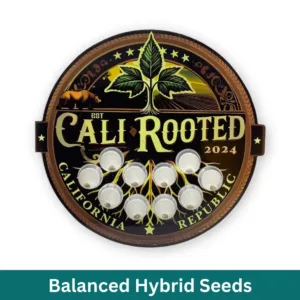 Rated 0 out of 5Sale!$19.99 – $34.99Price range: $19.99 through $34.99Select options This product has multiple variants. The options may be chosen on the product page
 -
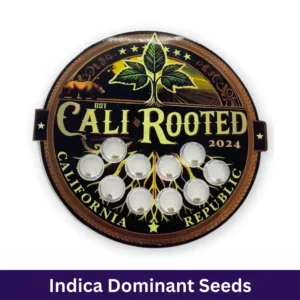 Rated 0 out of 5Sale!$19.99 – $34.99Price range: $19.99 through $34.99Select options This product has multiple variants. The options may be chosen on the product page
 -
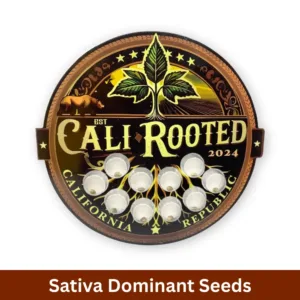 Rated 0 out of 5Sale!$19.99 – $34.99Price range: $19.99 through $34.99Select options This product has multiple variants. The options may be chosen on the product page
What Makes Autoflower Seeds Ideal For Growers
Autoflower seeds have become a staple among both licensed cultivators and serious home growers. Their value lies in consistent results, reduced labor, and flexibility across various grow environments. These traits make them an increasingly reliable choice for growers seeking efficiency and quality across harvest cycles:
Faster Harvest Cycles With No Light Scheduling
Autoflowering plants transition from vegetative to flowering stages automatically, regardless of light schedule changes. This eliminates the need for timed photoperiod lighting adjustments, streamlining indoor setups and allowing for quicker, predictable harvests, often in 8–10 weeks from germination.
Discreet Growth Suitable For Smaller Setups
These genetics tend to stay compact, making them ideal for growers working with limited space or seeking low-visibility cultivation. Whether it’s a small tent in a personal grow or a tightly managed greenhouse, autoflowers support discreet, efficient production without compromising yield potential.
Increased Resilience To Pests And Stress
Due to their lineage, many autoflower strains show greater tolerance to environmental fluctuations, pests, and stress. This resilience means fewer setbacks during the grow cycle and more consistent results, especially important for commercial growers who can’t afford variability in performance.
How To Choose The Best Autoflower Seeds For Your Grow
Choosing the best autoflower seeds starts with understanding the environment you’re working in and the type of end product you want to produce. It’s not just about THC percentage or flower structure. The right selection balances strain behavior, cannabinoid output, and compatibility with your operational goals:
Assess Your Environment And Grow Style
Autoflowers respond differently based on where and how they’re grown. A high-humidity greenhouse might call for mold-resistant cultivars, while indoor grows often benefit from short, bushy strains that fit within limited vertical space. Soil, hydro, or coco setups all have strain-specific advantages when chosen with environmental fit in mind.
Understand Desired Cannabinoid And Terpene Profiles
Whether aiming for high THC, balanced ratios, or terpene-dominant expressions, the genetic profile of a seed directly shapes the outcome. Cultivators should review lab data and sample reports before committing to a strain, ensuring the end product will meet either regulatory thresholds or consumer preferences.
Match Strain Genetics With Cultivation Goals
Autoflower seeds from Cali Rooted are designed to suit specific goals, from speed-to-harvest to premium flower production. Matching traits like growth cycle length, yield potential, and training responsiveness with your workflow helps avoid costly setbacks. It also ensures consistency across multiple runs or large-scale deployments.
Where To Buy The Best Autoflower Seeds In The U.S.
Finding a reliable source for autoflower seeds means looking beyond just pricing or popularity. U.S. growers, especially those managing licensed facilities or dedicated home grows, need access to verified genetics, proper storage, and responsive support. The right supplier offers more than just products, it supports consistent success:
Look For Verified Lab-Tested Seed Banks
Lab verification provides growers with confidence in germination rates, cannabinoid output, and overall genetic stability. Seed banks that can provide documentation for each batch help reduce the risk of inconsistent results or crop loss due to genetic drift or contamination.
Check For U.S.-Based Shipping And Support
Working with a domestic supplier reduces delays and avoids customs issues that can affect germination timelines. Faster delivery also preserves seed viability. Local support teams understand regional compliance needs and can offer faster resolutions if issues arise during the order or grow process.
Compare Strain Variety, Not Just Price
Price matters, but it should never be the only metric. A seed bank that offers a wide selection of stabilized autoflowers, each with detailed strain data, gives growers more control over matching genetics to their specific grow goals. Selection breadth reflects breeding depth and ongoing investment in quality.
Frequently Asked Questions About Best Autoflower Seeds
Are autoflower seeds suitable for outdoor grows in cooler climates?
Yes, many autoflower strains are ideal for cooler climates due to their short life cycle. They finish before seasonal shifts can cause stress or trigger mold risks.
Can autoflower seeds be cloned like photoperiod plants?
Technically yes, but it’s not recommended. Clones of autoflowers will be on the same internal timer as the mother, limiting their growth and yield potential.
Do autoflower strains produce lower THC levels than photoperiods?
Not anymore. Modern autoflower genetics now match or exceed THC levels of many photoperiod strains, especially with optimized breeding and selection.
Are autoflower seeds less stable than traditional feminized seeds?
No. High-quality autoflower seeds from reputable breeders are equally stable, especially when they’re produced through multi-generational selection.
How much light do autoflowers need per day?
Most perform best with 18 to 20 hours of light daily from seed to harvest, making them well-suited to consistent schedules without light-cycle adjustments.
Can I use training techniques on autoflowers?
Yes, but only low-stress training (LST) is recommended. High-stress methods can stunt growth due to the plant’s limited vegetative window.
Do autoflower plants require different nutrients than photoperiods?
The nutrient types are similar, but feeding schedules may need to start earlier due to the plant’s accelerated timeline. Timing is more critical than formula.
Is it possible to grow autoflowers in hydroponic systems?
Yes, autoflowers respond well to hydro when environmental control is precise. The speed of growth makes clean systems and careful pH management essential.
Sources:
- Toth, J., McPartland, J. M., Miller, R., Leon, M., Campos, O. G., Schweikert, S., & Smart, R. (2022). Identification and mapping of major-effect flowering time loci Autoflower1 and Early1 in Cannabis sativa L. Frontiers in Plant Science, 13, 991680. https://doi.org/10.3389/fpls.2022.991680
- Lubell-Brand, J. S. (2023). Gene dosage at the autoflowering locus affects flowering timing and yield potential in Cannabis sativa. Journal of the American Society for Horticultural Science, 148(2), 83–88. https://doi.org/10.21273/JASHS05293-23
- Nothnagel, T., Stroh, M., & Keller, J. (2019). Flowering time variation and its genetic basis in hemp (Cannabis sativa L.): Implications for cultivation. Industrial Crops and Products, 137, 80–89. https://doi.org/10.1016/j.indcrop.2019.05.056